

Viewing 1 - 10 out of 16

Vision Topics


Vision Therapy Programs
Saccadic Fixators
This entails a wall-mounted square board with a starburst design. Along the various striations of the starburst are lighted buttons. As the buttons light up, the patient works quickly to see how many of these lit buttons they can push before they go out. The key is to keep the head still. Peripheral
Vision Therapy Programs
Patches
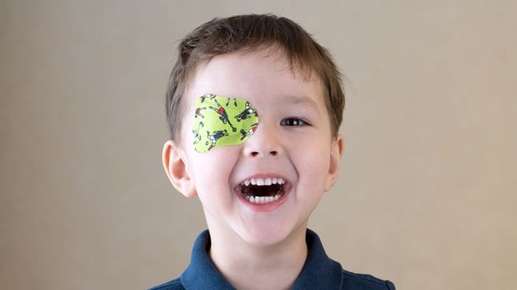
Eye patches are used to strengthen muscle control in weak eyes. By placing a patch over the strong eye, the weaker eye is forced to do the heavy lifting. While it may be uncomfortable for the patient at first, the muscle controlling the weaker eye will become tougher and more resilient. This will allow

Vision Therapy Programs
Rotation Trainers
Rotation trainers consist of a disk – with various designs – that is attached to a rod-like base. As the disk rotates, the patient is asked to perform tasks that are designed to test and enhance eye-hand coordination, space awareness, perceptual awareness and visual acuity.

Vision Therapy Programs
Computer Software
Computer aided vision therapy consists of a software package designed to enhance eye tracking skills, visual thinking, processing skills and binocular vision skills. Eye teaming, focusing and tracking are not optical in nature, and problems in these areas are the result of poor eye muscles. Specialized

Vision Therapy Programs
Prisms
A prism has the same cross-section across the entire length of its shape. When used in eyeglasses, they often correct abnormalities associated with nearsightedness, farsightedness and double vision. Eyeglasses, or corrective lenses, reduce or increase the size of the image based on the eyes’ ability

Vision Therapy Programs
Balance Board
The brain and the eyes work together to create a visual experience. On one hand, the eyes send signals to the brain, which allows it to translate that data into visuals; on the other, the brain sends signals to the muscles attached to each eye, controlling their movements. If anything disrupts these

Vision Therapy Programs
Corrective Lenses
Corrective lenses are used to correct deviations, adjust focal points or neutralize other anomalies that impact the eyes’ ability to focus an image on the retina. To do this, the lenses must be the correct type and of the right power. Strength – which is expressed as diopeters – relies on the material

Vision Therapy Programs
Training Devices
Visual-motor-sensory integration training uses various devices to appeal to a person’s senses, including touch, sound and smell. This type of therapy is particularly useful in children with autism. Devices may include play dough, rubber toys, weighted bells and blankets, water, rice, sand, beans, musical

Vision Therapy Programs
Cawthorne-Cooksey Exercises
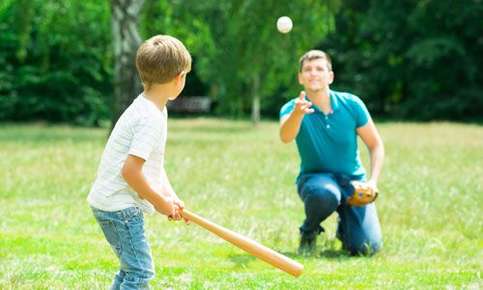
These exercises are mainly used at home and range from simple head and eye movements to performing more complex activities like throwing a ball or focusing on a stationary object while the head is moving. While moving one’s head and tossing a ball sounds easy enough, they are not simple tasks for persons
Vision Therapy Programs
Keep Your Eye on the Ball: How Vision Therapists Use Marsden Balls to Help Their Patients
A Marsden ball might not look very impressive, but this little ball offers big benefits for athletes and children affected by strabismus, ambylopia and other conditions. Marsden ball exercises are just one of the techniques that vision therapists use to help patients make better use of their vision. What
We help individuals protect and restore their vision through personalized eye care, so you can see clearly and get back to enjoying the things you love with confidence.
EXPLORE